

Commercial Exterior Cleaning for Gas Stations
Facility-level maintenance programs for fuel retail — pump islands, aprons, c-store frontage, and multi-site consistency for operators.
Gas Stations: Industry Overview
Fuel retail is a facility-management challenge disguised as a small property: a few thousand square feet of concrete absorbing fuel drips, oil, and tire traffic around the clock, beneath a canopy that advertises the brand to every passing car. For single-site dealers and multi-site operators alike, the question isn't whether the apron will stain — it's whether the site runs a program that stays ahead of it.
This page covers gas station exterior maintenance from the operator's perspective — zones, cycles, safety, and multi-site programs. For the full service breakdown, see our dedicated Gas Station Power Washing service page. Power Wash SoCal services stations across Southern California while pumps stay open, coordinating every visit with site staff.
Common Cleaning Challenges
Fuel sites concentrate petroleum staining, constant vehicle turnover, and strict operational constraints onto compact properties that can never fully close.
- Fuel and oil penetrating the apron concrete at every pump position
- Sites operating 24/7 with no natural cleaning window
- Slip exposure where customers walk between pumps and the store
- Brand image standards graded by fuel-brand territory reps
- Storm-drain adjacency requiring careful wash-water management
Request a Free Estimate
Ready to discuss an exterior cleaning program for your gas stations property?
Get a Free EstimatePlan Your Program
See our Gas Station Cleaning Guide for scheduling and budgeting guidance.
Not sure which method your surfaces need? Read Power Washing vs. Pressure Washing.
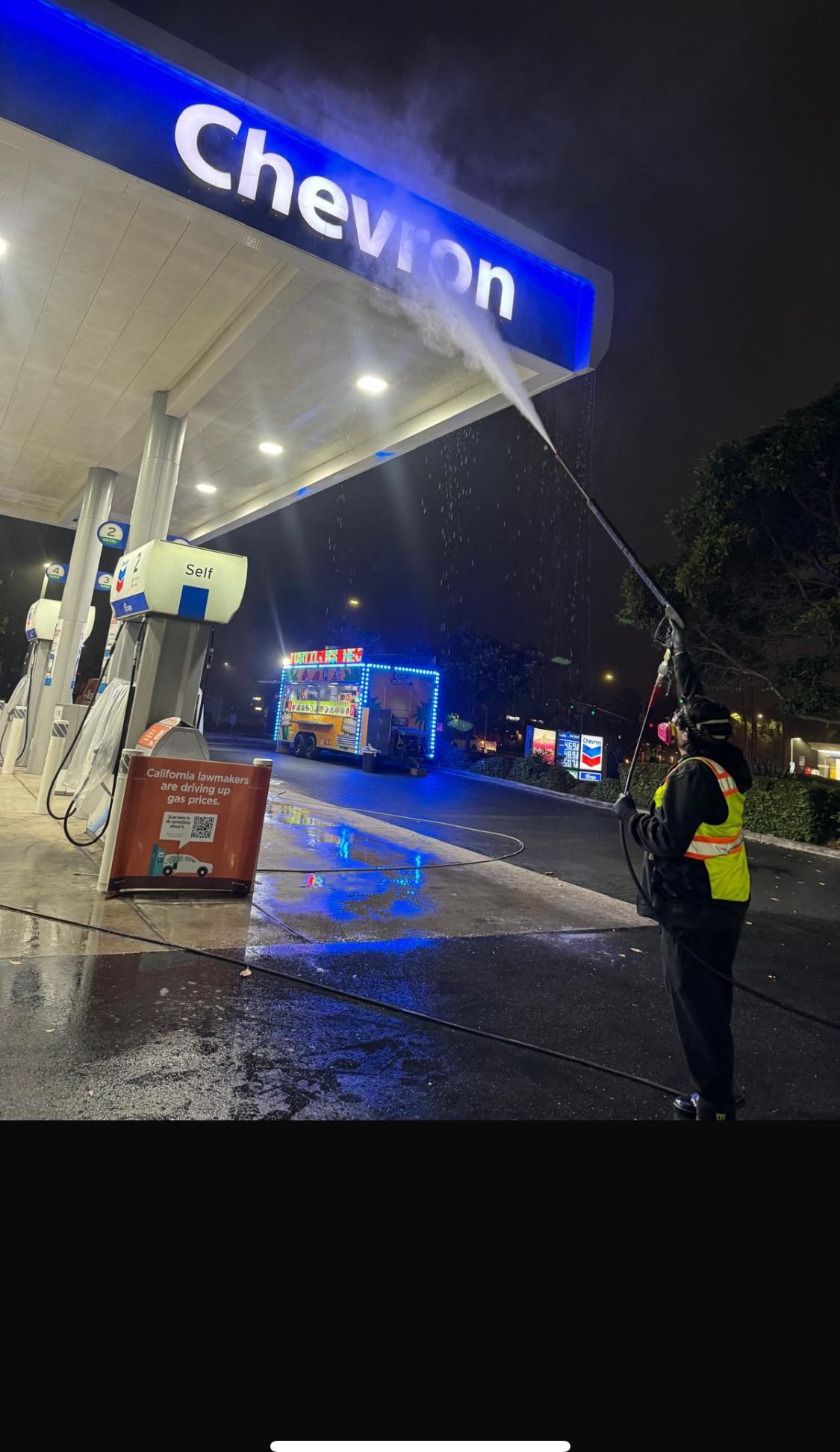
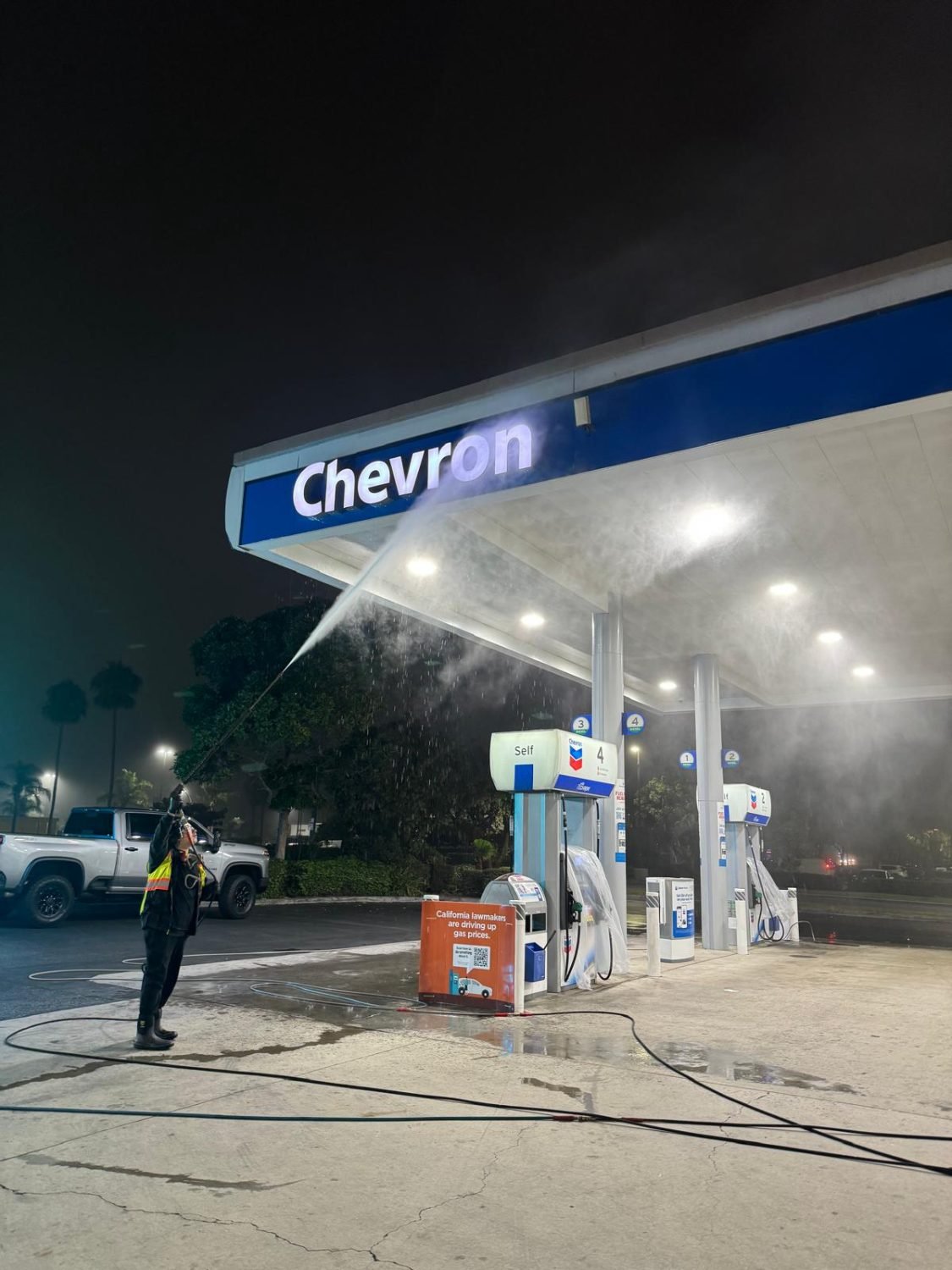
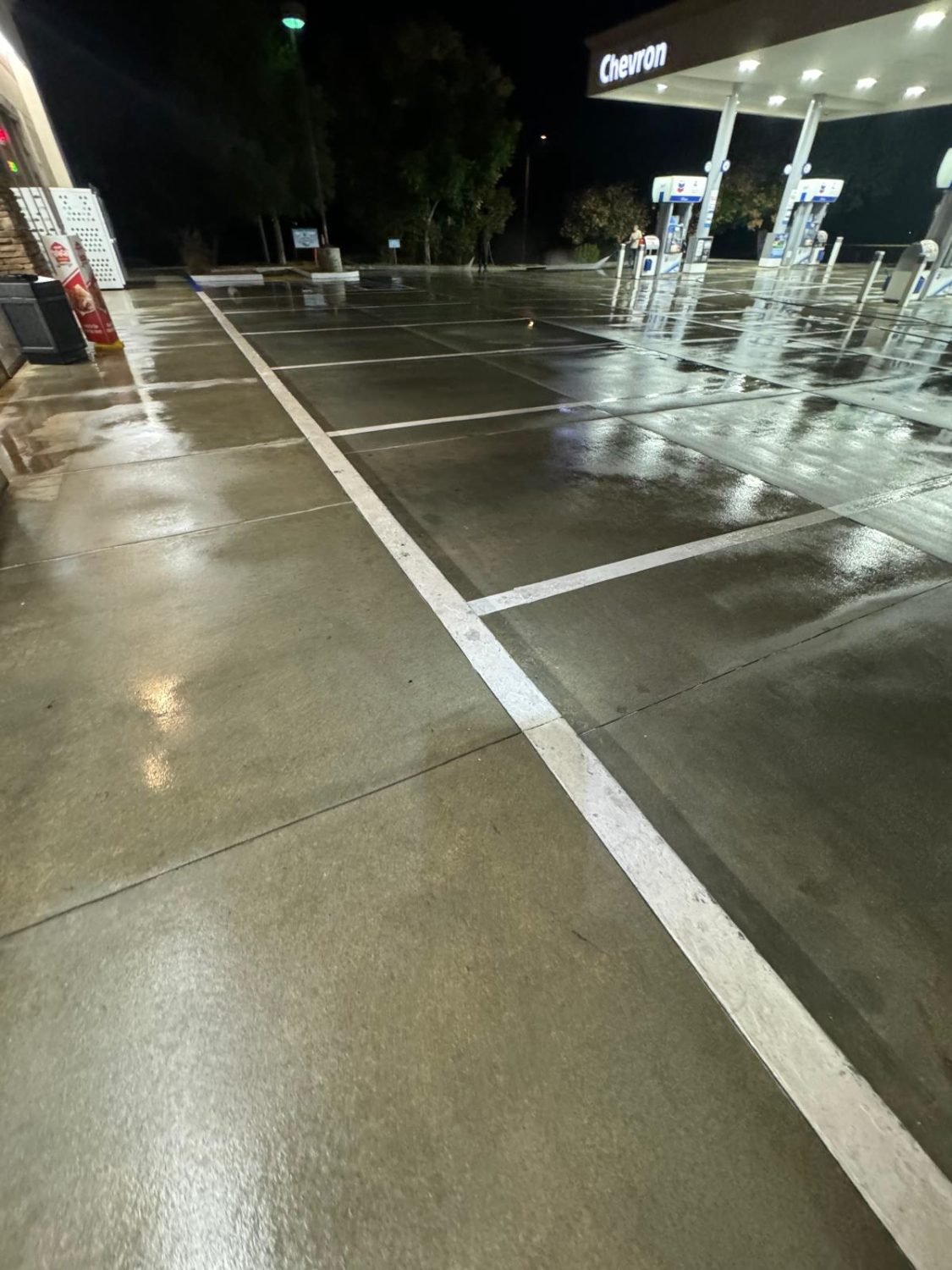
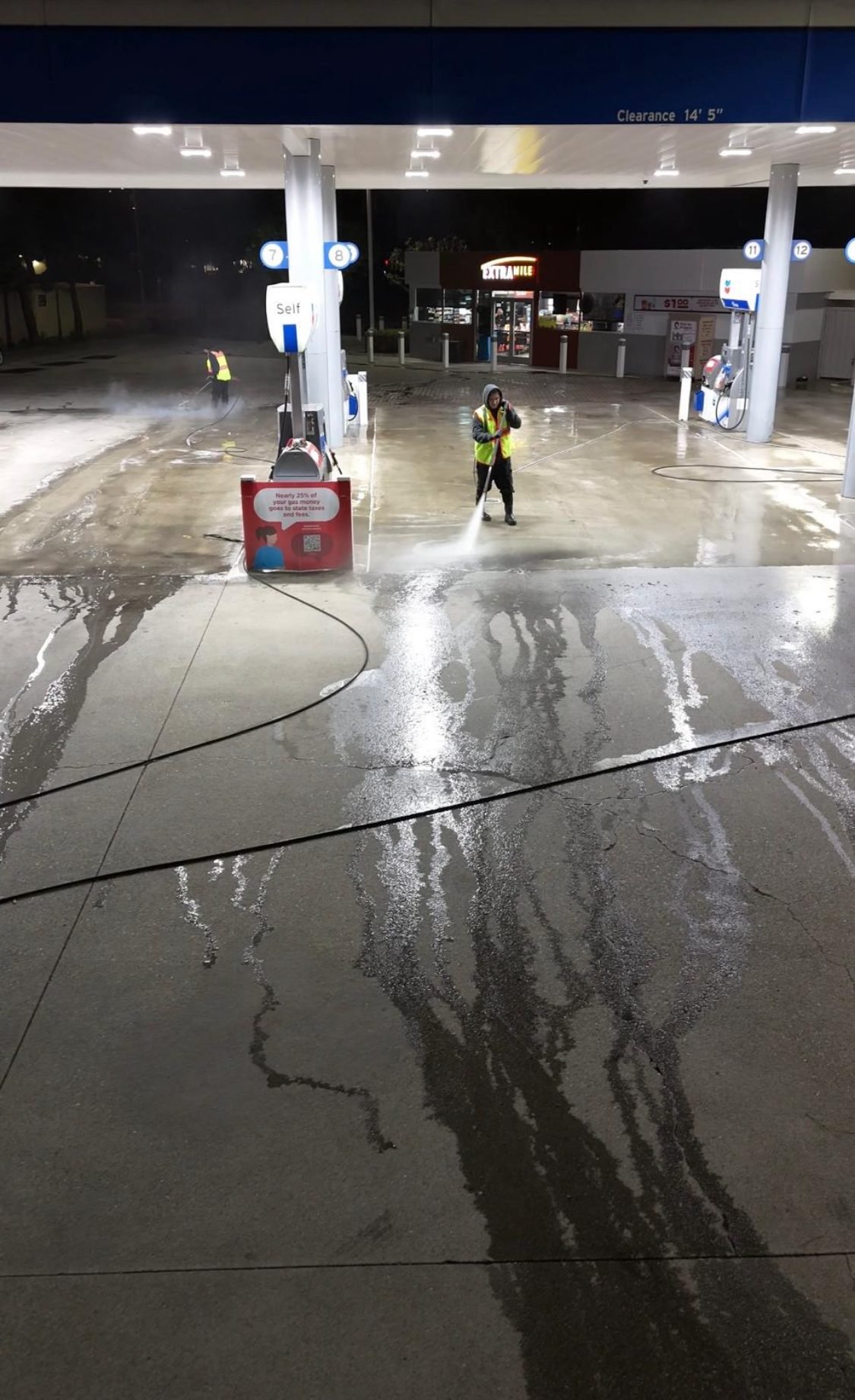
Real Southern California Project Work
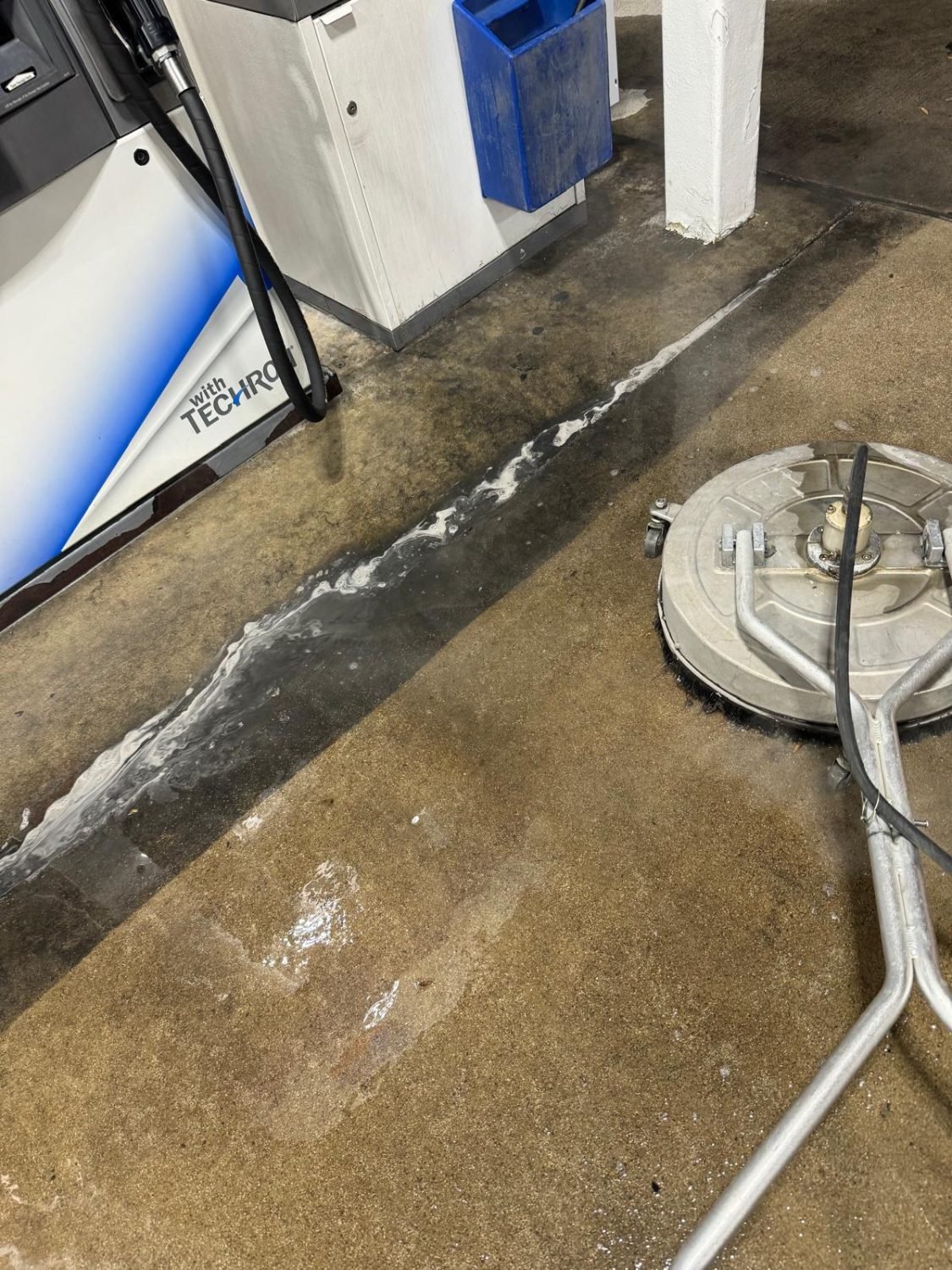
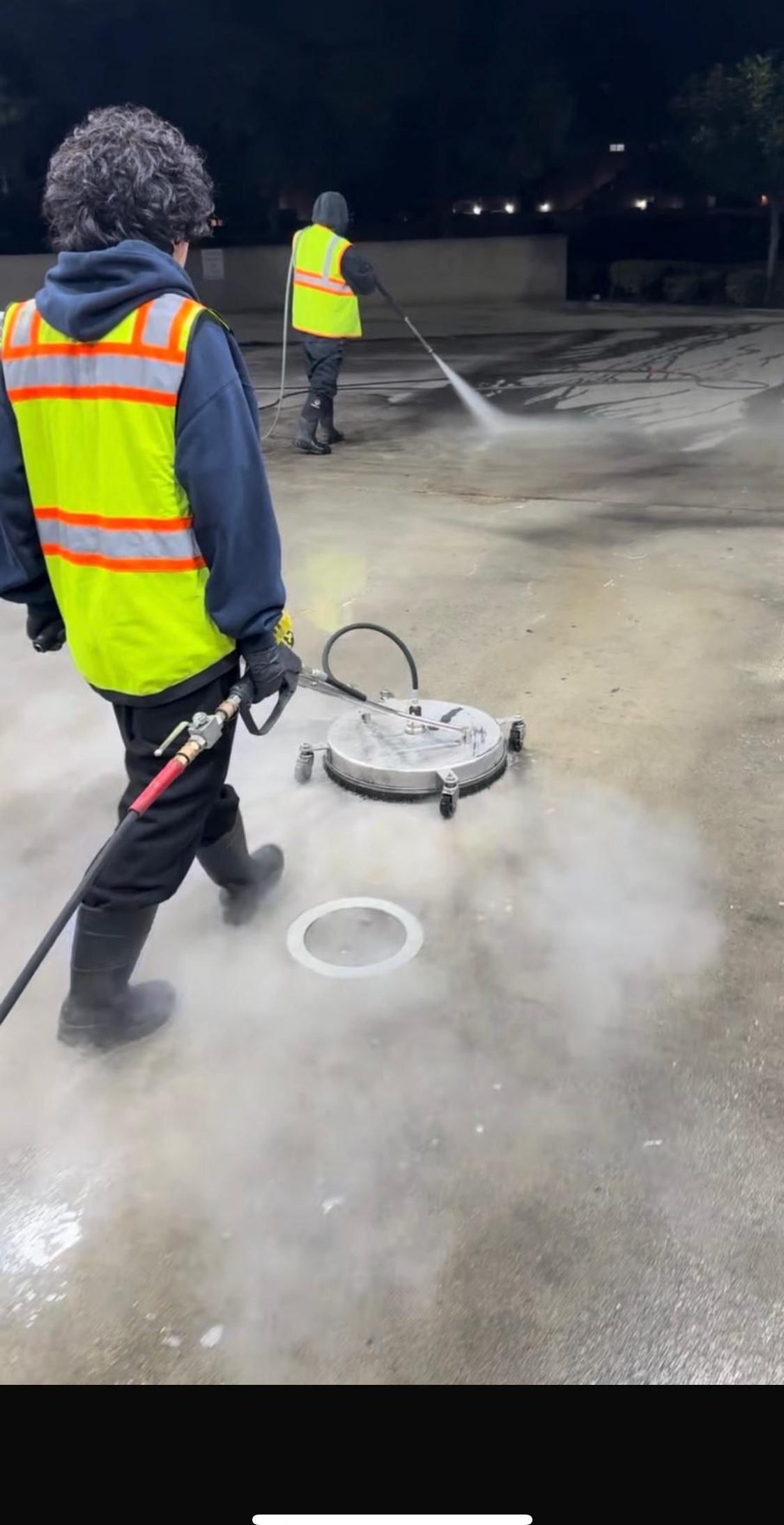
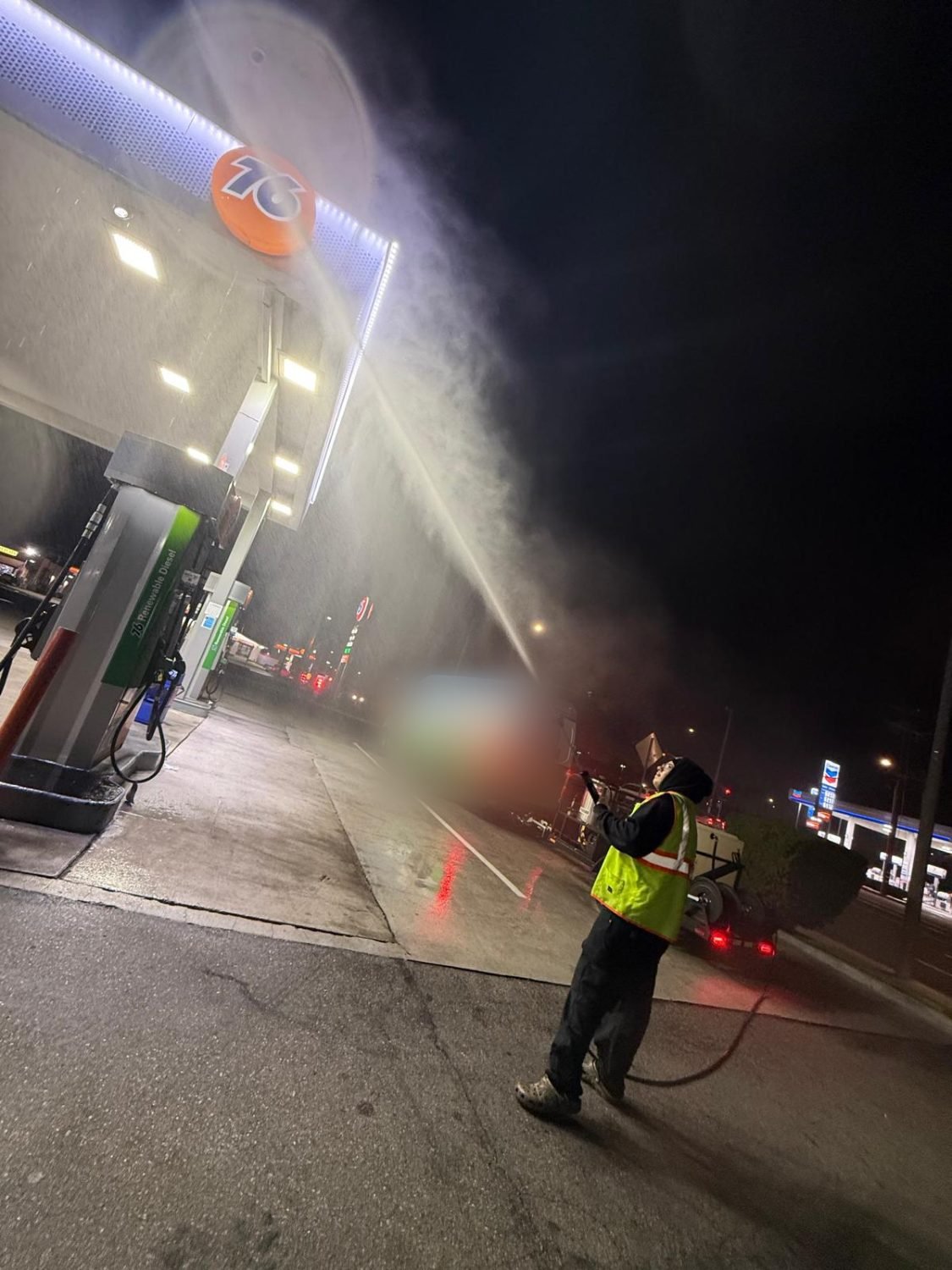
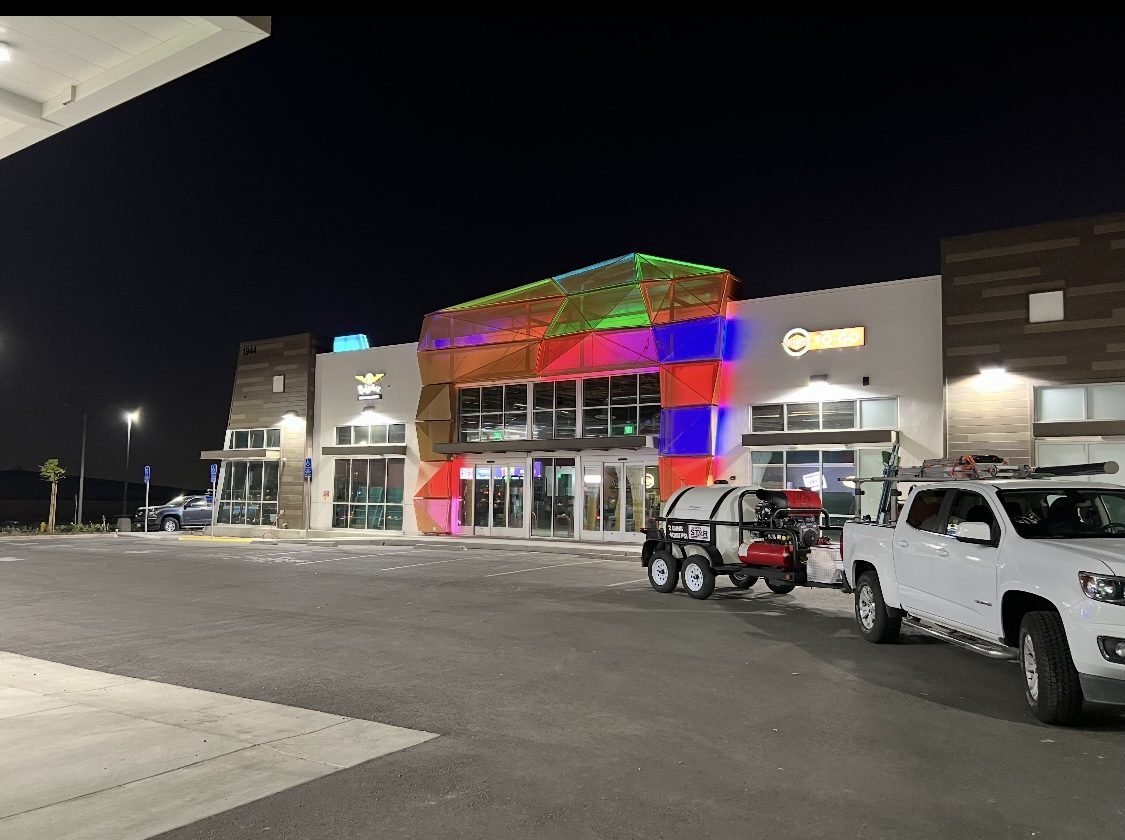
Original project photography and field video from Power Wash SoCal engagements — our jobs, our equipment, our camera.
How Our Services Apply to Gas Stations
Power Washing
Heated degreasing of pump islands, dispenser surrounds, and the apron's drip zones.
Concrete Cleaning & Oil Stain Removal
The core treatment for fuel and oil staining across the apron.
Pressure Washing
Canopy columns, curbs, bollards, and general site hardscape.
Storefront Cleaning
The c-store entrance and frontage where fuel customers become store customers.
Sidewalk Cleaning
The walking paths between pumps, air stations, and the store door.
Dumpster Enclosure Cleaning
Trash corral service for the site's compact, fast-cycling waste area.
Building Exterior Cleaning
C-store walls and canopy fascia that carry the site's brand presentation.
Our Cleaning Methods for Gas Stations
Fuel-site cleaning pairs heated power washing with petroleum-specific degreasers: pre-treatment on dispenser drip zones, controlled hot-water washing across the apron, and careful technique around dispensers, sumps, and electrical components. Wash water is managed with the site's drainage layout — containment and recovery where aprons drain toward storm systems. Work proceeds island by island in coordination with staff so fueling positions close briefly and reopen dry.
Recommended Cleaning Frequency
High-volume sites hold best on a monthly island-and-apron cycle with quarterly full-site service; moderate-volume sites on a quarterly cycle throughout. Multi-site operators typically standardize one cadence across the territory and tighten it for flagged locations.
Typical Contaminants
- Gasoline and diesel drips at every dispenser position
- Motor oil and coolant across the apron and air-station pad
- Tire film at entry and exit throats
- Gum and beverage spills on the store walkway
- Trash-corral residue on a compact, high-turnover pad
Benefits of Professional Cleaning
- Apron staining intercepted before it penetrates permanently
- Slip exposure controlled on the pump-to-store walking paths
- Canopy and frontage presentation that satisfies brand territory reviews
- One standardized program across an operator's full site list
- Service that never takes a pump out of revenue
Protecting Property Value
A fuel site's apron is simultaneously its workspace and its largest replaceable asset. Fuel and oil are aggressive concrete contaminants — they penetrate, weaken the surface matrix, and turn patch-and-replace work into a recurring capital line. Because apron replacement at an operating station means shutting down fueling positions, prevention carries operational value beyond the concrete itself. Sites on standing degreasing cycles also present better at the moments that matter: brand image audits, environmental inspections, and the eventual sale, where apron condition is one of the first things a buyer's inspector photographs.
Safety Considerations
A fuel site's walking surfaces carry customers over the property's slickest contaminants — fuel sheen, oil, and polished tire film — often at night, in a hurry. Recurring island and walkway degreasing directly reduces that exposure, and all work around dispensers follows site safety rules with staff coordination so fueling positions stay controlled throughout.
Maintenance Recommendations
Fuel-site maintenance runs on zone cycles: islands and drip zones on the fastest clock, the store walkway and frontage next, full-apron and canopy-column service on a quarterly or semi-annual rotation. Wash-water is managed with the site's drainage layout in mind. Our Gas Station Cleaning Guide details the full planning framework.
Long-Term Maintenance & Seasonal Planning
Fuel sites benefit from a long-term plan tied to both seasons and site events. Seasonally: hold island cycles steady year-round, add a pre-rain fall apron service so the first storms don't mobilize a summer of drips toward the drains, and refresh the c-store frontage ahead of summer travel season. Site events matter more: dispenser replacements, tank work, and canopy projects all disturb the apron and should end with a full cleaning; brand image audits and environmental inspections should have a service scheduled ahead of them. Over years, apron condition records become genuinely valuable — they document care for regulators, brands, and eventual buyers alike.
Why Power Wash SoCal
Commercial-grade equipment, experienced crews, and programs built around your operation — serving gas stations properties across Southern California. About our company.
Gas Stations: Frequently Asked Questions
How is this page different from your gas station service page?
The service page details what we clean and how; this page frames the operator-side program — zones, cycles, multi-site standardization, and where fuel sites fit among commercial property types.
Do you coordinate with fuel-brand image programs?
Yes — scopes can be aligned to a brand's site-image standards, and per-visit records give operators documentation for territory rep reviews.
How is wash water handled near storm drains?
Work is planned around each site's drainage layout, with containment and recovery practices appropriate to fuel-site runoff requirements.
Can a jobber or dealer group put twenty sites on one schedule?
Yes — multi-site operators receive one standardized scope, a rotating route schedule, and consolidated reporting across the territory.
Related Services
Related Industries
Where We Serve Gas Stations
Request a Free Estimate Today
Contact Power Wash SoCal for a complimentary, no-obligation estimate and a maintenance program built for your operation.
Get Your Free Quote